

A
s we age, our bodies lose skin laxity, producing a droopy look,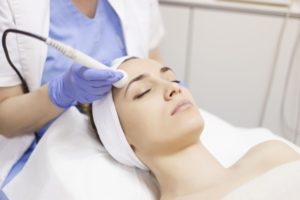 most commonly manifesting in a jowl-like neck, above-the-knees sagging, and loose upper arms. But thanks to breakthroughs in radio frequency and ultrasound technologies, which build collagen by engaging the skin’s deeper layers, patients are watching the clock roll back.
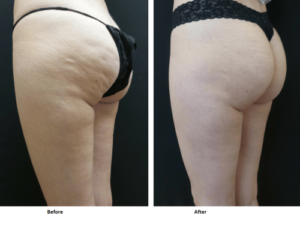
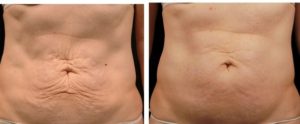
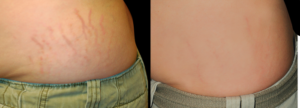
The prospect of treating sagging skin and cellulite without the scalpel, appeals to the majority of patients who are looking for subtle improvements but are not ready for a traditional facelift or surgery. Radiofrequency (RF) is the latest addition to the treatment options available for the ageing face and body, and is known as the non-surgical facelift. A safe, non-invasive, no downtime procedures which is ideal for tightening loose or lax skin which also aids cellulite reduction resulting in a better appearance of the ‘orange peel’ effect
echnically speaking, radiofrequency is the number of oscillations (or waves) per second of the electric and magnetic fields within the radio waves portion of the electromagnetic spectrum.
It is lowest of the electromagnetic radiation frequencies within the spectrum, which itself spans from radio waves, microwaves, infrared, optical (visible light), ultraviolet, x-rays, to gamma rays.
By feeding an alternating current (AC) or voltage through an antenna or electrode, electromagnetic waves can be generated that radiate through space at the speed of light; called radio waves. Radiofrequencies, or radio waves, have wavelengths ranging from less than a centimetre to as long as 100 kilometres.
US domestic electricity which itself is an alternating current could in theory be used for “electrosurgery”, however as most people know, contact with this kind of electric current can cause very undesirable effects such as electrocution and uncontrolled neuromuscular (nerve and muscle) stimulation. However, if the frequency of the alternating current is raised above the response time of neuromuscular structures, we find the radiofrequency range which can safely be used for medical/surgical applications.
By applying RF energy to the human body, which can conduct current and therefore act as part of the electrical circuit, any resistance encountered by the energy flow will cause heat to be produced at the site of maximum resistance, which can also be used to cut or coagulate tissue.
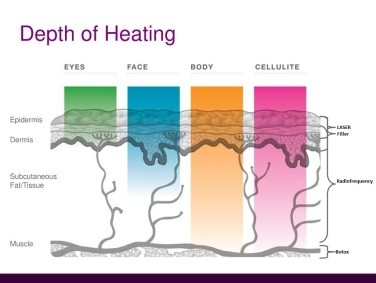
RF energy when used for skin tightening is able to penetrate deep into the skin and affect the deeper dermis and subcutaneous layers, causing tightening and improvements to the underlying tissue structure, but with little change in skin texture or fine lines and wrinkling
M
onopolar (also called Unipolar)
Monopolar or unipolar refers to a device having one pole or electrode.
With monopolar delivery, the current from the generating machine flows through the body from a single electrode (handpiece) and meets maximum resistance in the area around the tip of the handpiece, where tissue heating in the subdermal layers then occurs. A grounding, or “return pad” may also be used, attached to the patient’s lower back or abdomen, to provide a low resistance path for the current to flow back to the generating machine, to complete the electrical circuit.
An example of a monopolar RF only device used for facial rejuvenation and available in the US is Thermage®.
Biopolar
Biopolar refers to a device having two poles or electrodes.
With bipolar delivery, the current from the generating machine flows only through the tissue which is between the two electrodes on the handpiece; these electrodes start and complete the electrical circuit. Hence, with bipolar delivery, no current flows through the rest of the body, so no grounding or return pad is needed.
In all cases of radiofrequency delivery types, it is the resistance to the current flow in the tissue, not the electrode that generates the heating effect.
T
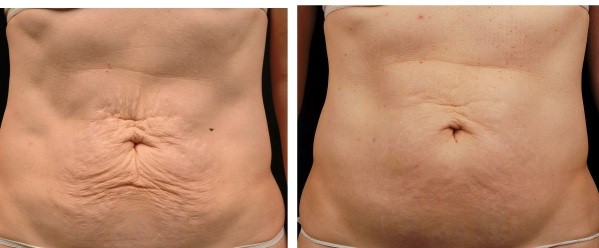
he skin is made up of two layers, the visible outer layer called the epidermis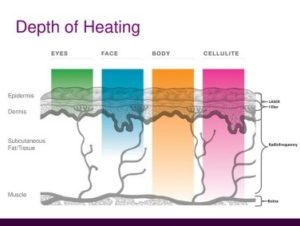 and the deeper layer called the dermis. The main structural support of the dermis is provided by the protein called collagen. Radio Frequency tightens the skin by two separate processes. Firstly it has an immediate effect by tightening the supportive framework of the skin (by contraction of collagen fibres and tissue retraction) aiding remodelling and rejuvenation. Secondly, heating the dermis stimulates the body to produce collagen, boosting a healing response. This acts as a new deep foundation for the skin producing further tightening that becomes evident over several months. The combination of these two processes provide immediate skin tightening and further long-term tightening effects. RF also facilitates cellulite and fat reduction by improving blood flow to the treated area and promoting the breakdown of fat cells, aiding the re-absorption and drainage of fatty deposits and retained fluids. Radio Frequency can treat any area of the body where loose of lax skin is apparent.
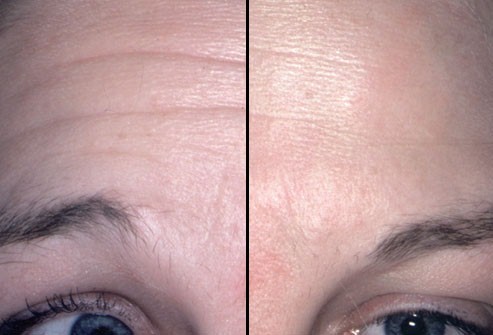
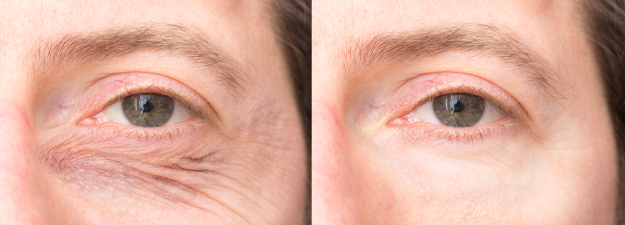
ure RF energy alone is primarily used to treat skin laxity by facial tightening, and is best suited to patients with mild to moderate sagging of facial tissues, usually those in their mid thirties to fifties, with any skin color.
It is commonly used to treat the
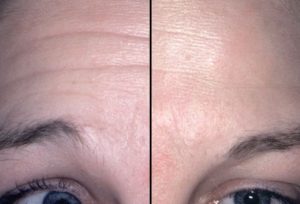
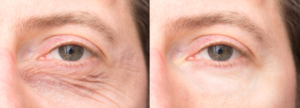
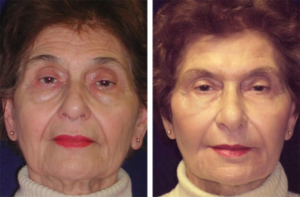
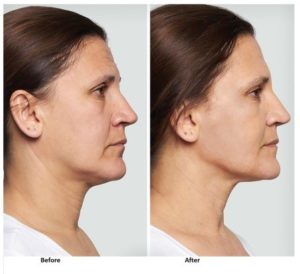
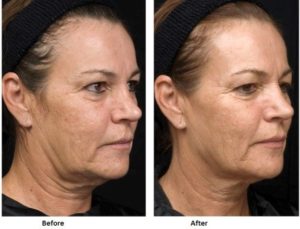
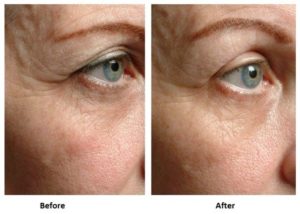
However, if there is a significant amount of redundant or sagging skin, often seen in older patients over sixty, this procedure may not show a significant enough improvement and a traditional mid-face, face or brow lift operation may be recommended in order to remove the excess skin, therefore achieving a better result.
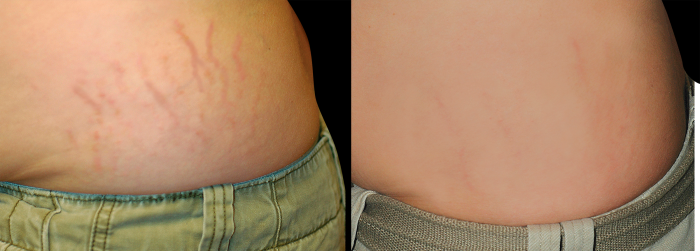
In combination with other modalities, RF can be used to enhance a variety of treatments including hair removal, photo rejuvenation, pigmented and vascular problems, acne treatment and cellulite treatment.
Y
ou should try to avoid doing anything that will irritate your skin immediately before treatment. This includes sunbathing (natural or artificial). Physicians are unlikely to treat someone who has sun burn for example, as they would be more likely to suffer pain from the addition of heat to the already damaged skin; however an established tan would be fine.
Some women find that their skin is more sensitive right before and during their menstrual cycle so if you are a woman, you might want to take this effect on pain threshold into consideration when scheduling your treatment appointment(s).
T
olerance to the treatment is very good. Patients will generally experience a warm sensation on the surface of the skin as the heat builds up; however continuous contact cooling provides additional patient comfort.
ollowing a course of treatment, results are expected to last 1-2 years
areful discussions regarding your reasons for wanting treatment are very important before you begin the treatment. You must also make sure that this treatment can deliver what you want and how you would like to look afterwards. Your physician should be able to answer all these questions.
A medical history should also be taken to make sure that there are no reasons why you shouldn’t undertake treatment. You may be asked to sign a consent form which means that you have understood the potential benefits and risks associated with the procedure.
Photographs may also be taken by the practitioner for a “before and after” comparison at a later date.
You may be required to wash your face with soap and warm water prior to your treatment, in order to remove any makeup and skin oils which could interfere with the application of the RF treatment.
A topical anaesthetic cream may then be applied to your skin a short time prior to treatment, to help numb the skin slightly; this will normally be removed using alcohol cleansers immediately before your clinician commences the procedure.
Depending on the device being used and your practitioner, a “treatment grid” ink transfer may then be applied over your face to assist the physician in navigating your face whilst delivering the RF energy; helping to assure an even application of the RF and to prevent inadvertent overlapping of treatment.
Again, dependent of the device being used you may be fitted with a single-use, self-adhesive return pad attached to your stomach or back to ground you; normally with monopolar devices.
A coupling gel may then also be applied over your face which acts as an additional barrier between the surface layers of your skin and the handpiece of the device.
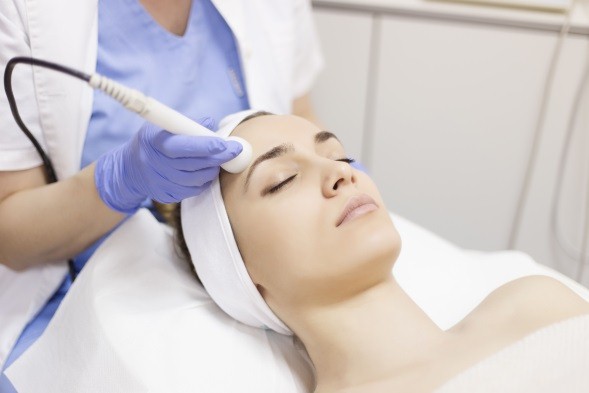
Your clinician will then commence the RF treatment working across your face. Once completed a soothing gel or lotion may be applied to your skin.
Immediately following the treatment, your skin will feel tighter, with more tightening improvements appearing gradually over the months after treatment.
Results are said to last up to a couple of years, and a single initial treatment can be enough to produce results in some people, depending on skin thickness; however your physician will be able to determine a course of treatments specific to you and your needs.
ome people experience mild redness immediately following treatment (similar to a sunburnt look), but this usually disappears quickly. Most people find that they can return to work and normal activities immediately after treatment.
s the treatment is carried out you will experience brief, deep heating sensations every time the RF energy is delivered to your skin and underlying tissue. Devices may have an inbuilt cryogenic capability whereby the handpiece is either chilled or emits a cooling spray before, during and after the RF burst, to protect your skin from the heating, and make the treatment more comfortable.
As each person’s pain tolerance and threshold varies, it is difficult to quantify how painful or uncomfortable the treatment is. It also depends on the device used and the power settings for the treatment. Your clinician may offer you anaesthetic options, such as a topical anaesthetic cream applied to your skin prior to treatment, or relaxants and pain management drugs, that can minimize your discomfort.
The most frequently reported side effects of treatment with RF energy are swelling, redness, bumps and blisters on or around the treated area, which typically disappear in a few days or weeks.
One of the most serious potential complications from RF energy treatment is a “depression”; this is attributed to the overheating of underlying tissue causing fat atrophy or excessive tightening, giving you a sunken appearance in the affected area. The occurrence of this also depends on the device used and appears to be only currently reported with the Thermacool™ system. Generally, although further studies and more available data is needed, it is considered that there is a correlation between the occurrence of these depressions and the treatment being given at frequency levels above the manufacturer’s guidelines. It is therefore imperative that you make sure that your practitioner is adequately trained and certified to perform the RF treatment.
o special care is needed after treatment although your physician may suggest some of the following:
Light application of soothing/moisturising lotions, creams or gels to the treatment area;
cool, moisturising mists applied as you feel necessary;
cool water rinses or ice packs applied to the treatment area.
s long as you are generally healthy and don’t have any skin diseases or infections in the area treated, there are few medical reasons why patients should not undergo this treatment.
People with sensory disturbance to the skin may not be considered good candidates as this could make the reporting of discomfort during the procedure unreliable, leading to potential harm.
Although there is no evidence that this treatment is harmful for pregnant women, you would generally be advised to wait until after you have given birth before embarking upon a course of treatment.
More importantly, people with electrical devices e.g., pacemakers, or metal implants e.g., artificial metal hip joints, heart valves or dental plates, cannot be treated because RF current flowing through the body may interfere with these devices or heat up metal implants, which could be dangerous.
F energy treatment is a new and promising technology for non-surgical tightening of the early signs of loose or sagging skin; ideal for those people who either don’t want, or don’t believe they are old enough to have a surgical procedure to resolve their onset of skin laxity.
Based on current RF technologies available, most people should see at least a mild improvement in their skin tightness, with minimal risks and downtime compared to surgery.
It is difficult to assess the differences in results between the differing RF technologies that are currently available, and as this market place expands, we anticipate seeing many more devices introduced, with newer improved treatment methods and protocols to further enhance patient comfort and results.
As we age, our bodies lose skin laxity, producing a droopy look, most commonly manifesting in a jowl-like neck, above-the-knees sagging, and loose upper arms. But thanks to breakthroughs in radio frequency and ultrasound technologies, which build collagen by engaging the skin’s deeper layers, patients are watching the clock roll back.
The prospect of treating sagging skin and cellulite without the scalpel, appeals to the majority of patients who are looking for subtle improvements but are not ready for a traditional facelift or surgery. Radiofrequency (RF) is the latest addition to the treatment options available for the ageing face and body, and is known as the non-surgical facelift. A safe, non-invasive, no downtime procedures which is ideal for tightening loose or lax skin which also aids cellulite reduction resulting in a better appearance of the ‘orange peel’ effect
Technically speaking, radiofrequency is the number of oscillations (or waves) per second of the electric and magnetic fields within the radio waves portion of the electromagnetic spectrum.
It is lowest of the electromagnetic radiation frequencies within the spectrum, which itself spans from radio waves, microwaves, infrared, optical (visible light), ultraviolet, x-rays, to gamma rays.
By feeding an alternating current (AC) or voltage through an antenna or electrode, electromagnetic waves can be generated that radiate through space at the speed of light; called radio waves. Radiofrequencies, or radio waves, have wavelengths ranging from less than a centimetre to as long as 100 kilometres.
US domestic electricity which itself is an alternating current could in theory be used for “electrosurgery”, however as most people know, contact with this kind of electric current can cause very undesirable effects such as electrocution and uncontrolled neuromuscular (nerve and muscle) stimulation. However, if the frequency of the alternating current is raised above the response time of neuromuscular structures, we find the radiofrequency range which can safely be used for medical/surgical applications.
By applying RF energy to the human body, which can conduct current and therefore act as part of the electrical circuit, any resistance encountered by the energy flow will cause heat to be produced at the site of maximum resistance, which can also be used to cut or coagulate tissue.
RF energy when used for skin tightening is able to penetrate deep into the skin and affect the deeper dermis and subcutaneous layers, causing tightening and improvements to the underlying tissue structure, but with little change in skin texture or fine lines and wrinkling
Monopolar (also called Unipolar)
Monopolar or unipolar refers to a device having one pole or electrode.
With monopolar delivery, the current from the generating machine flows through the body from a single electrode (handpiece) and meets maximum resistance in the area around the tip of the handpiece, where tissue heating in the subdermal layers then occurs. A grounding, or “return pad” may also be used, attached to the patient’s lower back or abdomen, to provide a low resistance path for the current to flow back to the generating machine, to complete the electrical circuit.
An example of a monopolar RF only device used for facial rejuvenation and available in the US is Thermage®.
Biopolar
Biopolar refers to a device having two poles or electrodes.
With bipolar delivery, the current from the generating machine flows only through the tissue which is between the two electrodes on the handpiece; these electrodes start and complete the electrical circuit. Hence, with bipolar delivery, no current flows through the rest of the body, so no grounding or return pad is needed.
In all cases of radiofrequency delivery types, it is the resistance to the current flow in the tissue, not the electrode that generates the heating effect.
The skin is made up of two layers, the visible outer layer called the epidermis and the deeper layer called the dermis. The main structural support of the dermis is provided by the protein called collagen. Radio Frequency tightens the skin by two separate processes. Firstly it has an immediate effect by tightening the supportive framework of the skin (by contraction of collagen fibres and tissue retraction) aiding remodelling and rejuvenation. Secondly, heating the dermis stimulates the body to produce collagen, boosting a healing response. This acts as a new deep foundation for the skin producing further tightening that becomes evident over several months. The combination of these two processes provide immediate skin tightening and further long-term tightening effects. RF also facilitates cellulite and fat reduction by improving blood flow to the treated area and promoting the breakdown of fat cells, aiding the re-absorption and drainage of fatty deposits and retained fluids. Radio Frequency can treat any area of the body where loose of lax skin is apparent.
Pure RF energy alone is primarily used to treat skin laxity by facial tightening, and is best suited to patients with mild to moderate sagging of facial tissues, usually those in their mid thirties to fifties, with any skin color.
It is commonly used to treat the
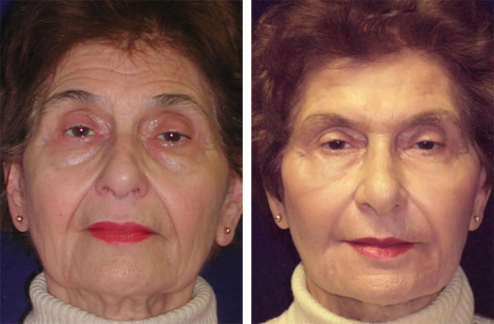
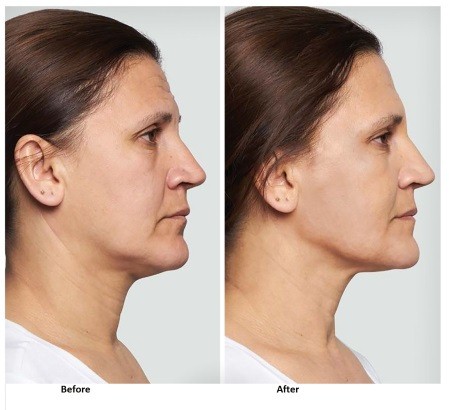
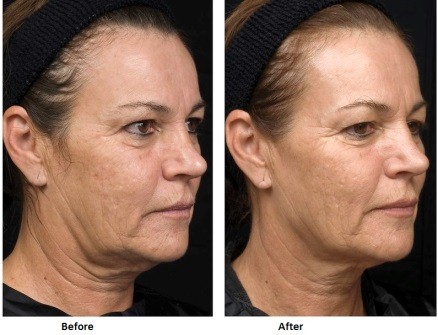
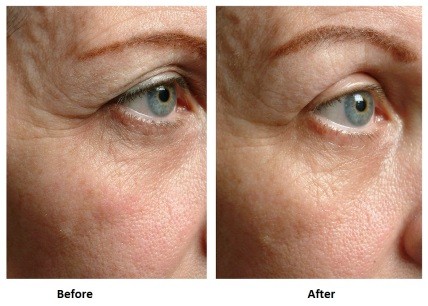
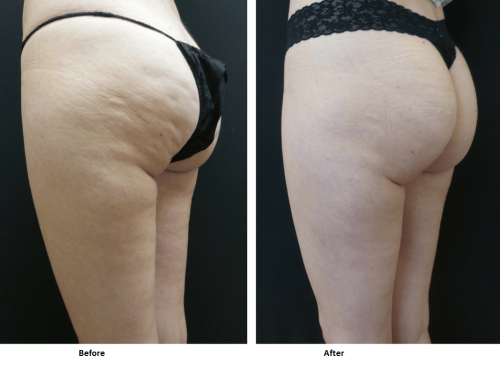
However, if there is a significant amount of redundant or sagging skin, often seen in older patients over sixty, this procedure may not show a significant enough improvement and a traditional mid-face, face or brow lift operation may be recommended in order to remove the excess skin, therefore achieving a better result.
In combination with other modalities, RF can be used to enhance a variety of treatments including hair removal, photo rejuvenation, pigmented and vascular problems, acne treatment and cellulite treatment.
You should try to avoid doing anything that will irritate your skin immediately before treatment. This includes sunbathing (natural or artificial). Physicians are unlikely to treat someone who has sun burn for example, as they would be more likely to suffer pain from the addition of heat to the already damaged skin; however an established tan would be fine.
Some women find that their skin is more sensitive right before and during their menstrual cycle so if you are a woman, you might want to take this effect on pain threshold into consideration when scheduling your treatment appointment(s).
Tolerance to the treatment is very good. Patients will generally experience a warm sensation on the surface of the skin as the heat builds up; however continuous contact cooling provides additional patient comfort.
Following a course of treatment, results are expected to last 1-2 years
Careful discussions regarding your reasons for wanting treatment are very important before you begin the treatment. You must also make sure that this treatment can deliver what you want and how you would like to look afterwards. Your physician should be able to answer all these questions.
A medical history should also be taken to make sure that there are no reasons why you shouldn’t undertake treatment. You may be asked to sign a consent form which means that you have understood the potential benefits and risks associated with the procedure.
Photographs may also be taken by the practitioner for a “before and after” comparison at a later date.
You may be required to wash your face with soap and warm water prior to your treatment, in order to remove any makeup and skin oils which could interfere with the application of the RF treatment.
A topical anaesthetic cream may then be applied to your skin a short time prior to treatment, to help numb the skin slightly; this will normally be removed using alcohol cleansers immediately before your clinician commences the procedure.
Depending on the device being used and your practitioner, a “treatment grid” ink transfer may then be applied over your face to assist the physician in navigating your face whilst delivering the RF energy; helping to assure an even application of the RF and to prevent inadvertent overlapping of treatment.
Again, dependent of the device being used you may be fitted with a single-use, self-adhesive return pad attached to your stomach or back to ground you; normally with monopolar devices.
A coupling gel may then also be applied over your face which acts as an additional barrier between the surface layers of your skin and the handpiece of the device.
Your clinician will then commence the RF treatment working across your face. Once completed a soothing gel or lotion may be applied to your skin.
Immediately following the treatment, your skin will feel tighter, with more tightening improvements appearing gradually over the months after treatment.
Results are said to last up to a couple of years, and a single initial treatment can be enough to produce results in some people, depending on skin thickness; however your physician will be able to determine a course of treatments specific to you and your needs.
Some people experience mild redness immediately following treatment (similar to a sunburnt look), but this usually disappears quickly. Most people find that they can return to work and normal activities immediately after treatment.
As the treatment is carried out you will experience brief, deep heating sensations every time the RF energy is delivered to your skin and underlying tissue. Devices may have an inbuilt cryogenic capability whereby the handpiece is either chilled or emits a cooling spray before, during and after the RF burst, to protect your skin from the heating, and make the treatment more comfortable.
As each person’s pain tolerance and threshold varies, it is difficult to quantify how painful or uncomfortable the treatment is. It also depends on the device used and the power settings for the treatment. Your clinician may offer you anaesthetic options, such as a topical anaesthetic cream applied to your skin prior to treatment, or relaxants and pain management drugs, that can minimize your discomfort.
The most frequently reported side effects of treatment with RF energy are swelling, redness, bumps and blisters on or around the treated area, which typically disappear in a few days or weeks.
One of the most serious potential complications from RF energy treatment is a “depression”; this is attributed to the overheating of underlying tissue causing fat atrophy or excessive tightening, giving you a sunken appearance in the affected area. The occurrence of this also depends on the device used and appears to be only currently reported with the Thermacool™ system. Generally, although further studies and more available data is needed, it is considered that there is a correlation between the occurrence of these depressions and the treatment being given at frequency levels above the manufacturer’s guidelines. It is therefore imperative that you make sure that your practitioner is adequately trained and certified to perform the RF treatment.
No special care is needed after treatment although your physician may suggest some of the following:
Light application of soothing/moisturising lotions, creams or gels to the treatment area;
cool, moisturising mists applied as you feel necessary;
cool water rinses or ice packs applied to the treatment area.
As long as you are generally healthy and don’t have any skin diseases or infections in the area treated, there are few medical reasons why patients should not undergo this treatment.
People with sensory disturbance to the skin may not be considered good candidates as this could make the reporting of discomfort during the procedure unreliable, leading to potential harm.
Although there is no evidence that this treatment is harmful for pregnant women, you would generally be advised to wait until after you have given birth before embarking upon a course of treatment.
More importantly, people with electrical devices e.g., pacemakers, or metal implants e.g., artificial metal hip joints, heart valves or dental plates, cannot be treated because RF current flowing through the body may interfere with these devices or heat up metal implants, which could be dangerous.
RF energy treatment is a new and promising technology for non-surgical tightening of the early signs of loose or sagging skin; ideal for those people who either don’t want, or don’t believe they are old enough to have a surgical procedure to resolve their onset of skin laxity.
Based on current RF technologies available, most people should see at least a mild improvement in their skin tightness, with minimal risks and downtime compared to surgery.
It is difficult to assess the differences in results between the differing RF technologies that are currently available, and as this market place expands, we anticipate seeing many more devices introduced, with newer improved treatment methods and protocols to further enhance patient comfort and results.